To stay competitive, businesses must optimize how they use time, people, and resources—especially on the frontline, where employees directly serve customers.
🔍 What is Frontline Operational Efficiency?
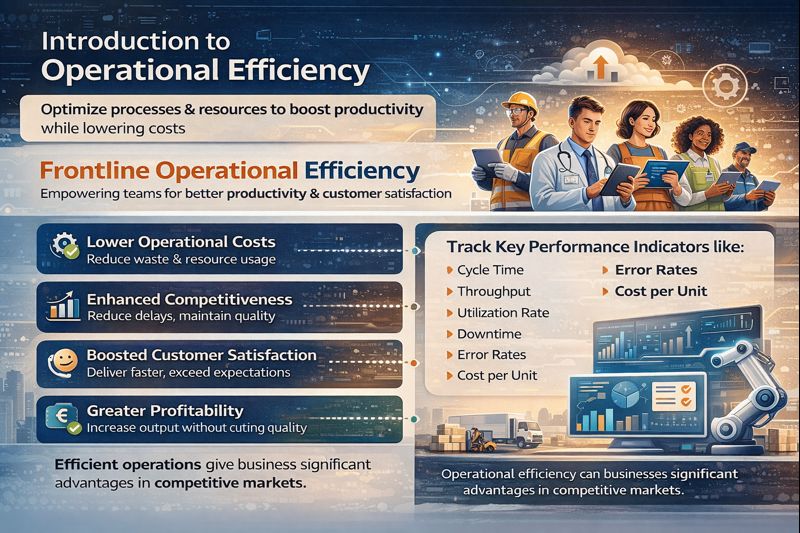
Frontline operational efficiency means improving productivity and reducing waste in customer-facing roles. It’s key for:
Better customer experiences
Higher profitability
Fewer errors and faster service
📈 Key Metrics to Track
Cycle time: How long tasks take
Throughput: Work done per time period
Utilization: % of productive time
Downtime: Time systems are inactive
Error rates: Frequency of mistakes
Cost per unit: Cost to produce one unit
💡 Benefits
Lower costs and fewer errors
Faster service and happier customers
More productive teams
Improved decision-making via AI
Greater agility and competitiveness
🏥 Examples by Industry
Healthcare: Automate scheduling and access to records
Manufacturing: Use robotics and just-in-time inventory
Hospitality: Mobile check-ins and demand-based scheduling
Logistics: Route optimization and automation
Retail: Smart inventory management to reduce shortages
⚖️ Efficiency vs. Effectiveness vs. Productivity
Efficiency = Doing things right with fewer resources
Effectiveness = Doing the right things for better results
Productivity = Amount of output over time → A balance of all three drives sustainable growth
🤖 AI-Driven Efficiency
Use AI tools like Microsoft Power Apps & Power Automate to: